

After the World Cup
Haiti’s participation should not be seen only as a celebration of qualification or as a review of three defeats. It should be viewed as a starting point.

Haiti’s qualification for the 2026 FIFA World Cup was a historic moment. After more than five decades away from football’s biggest tournament, Les Grenadiers returned to the global stage and gave Haitians in Haiti and around the world a reason to celebrate. The team faced Scotland, Brazil, and Morocco, three formidable opponents, and although Haiti lost all three matches, the performances demonstrated something important: the talent and potential exist. The challenge now is transforming that potential into sustainable progress.
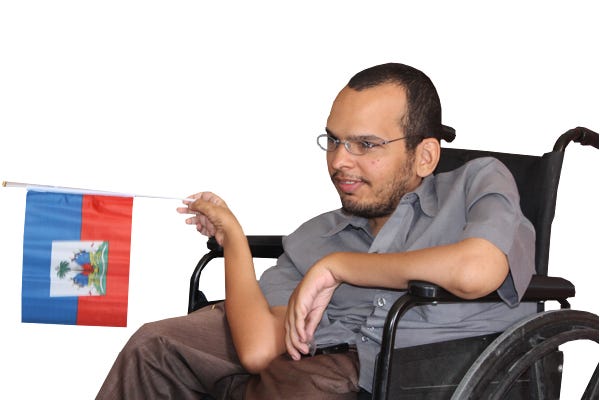
I must first admit that I am not a football expert. Like many Haitians, I enjoy watching the game, especially during major international competitions such as the World Cup and Copa América. After Haiti’s matches, much of the criticism focused on the head coach and tactical decisions. Some choices can certainly be debated, including the very defensive alignment against Brazil. A change in leadership may eventually become necessary. However, if we truly want to use this experience as a stepping-stone, we must look beyond one coach or one tournament and examine the deeper realities affecting Haitian football.
The first challenge is the lack of regular competition. For years, Haiti’s national championship was inactive because of the difficult security situation in the country, particularly in areas in and around the capital. This interruption meant that players based in Haiti had fewer opportunities to compete consistently at a high level. Recent efforts to revive the championship are encouraging, but the new format has been more modest, adapted to the current realities of insecurity and limited resources.
Competition is essential because talent develops through repetition, pressure, and experience. A young player needs meaningful games throughout the year, not just occasional opportunities. Haiti must continue rebuilding not only the national championship, but also regional and community competitions involving different age groups.
The second challenge is the limited number of structured training programs. Many individuals and organizations, such as Fondaps and FC Toro, are already doing important work, and they deserve recognition. I salute their efforts despite the limited resources available to them. Still, the reality is that many players representing Haiti today are members of the diaspora or Haitians born abroad. We welcome all of them with pride; our national motto reminds us that unity creates strength. However, developing homegrown talent by creating opportunities for young Haitians to train and compete remains essential for the long-term future of our football.
My experience working in youth basketball has shown me how important this foundation is. Through Fondation J’Aime Haïti, we have established a basketball training program for children in four disadvantaged communities. Several times a week, coaches work with young participants to teach them the fundamentals of the game, develop discipline, and create opportunities. We organize tryouts to identify new talent and create competitive experiences through in-house tournaments and games against other teams.
The third challenge is the absence of a complete football ecosystem. Successful football nations do not only produce talented national teams; they build systems. They connect schools, communities, academies, clubs, youth competitions, professional leagues, and national teams into a continuous pathway.
Football development cannot depend only on isolated initiatives or short-term projects, however admirable they may be. Greater coordination and synergy must be developed between the different actors within this chain. This is where the role of the Ministry of Sports and the Haitian Football Federation becomes essential. Developing football requires a long-term vision, investment, planning, and collaboration.
Haiti’s World Cup participation should not be seen only as a celebration of qualification or as a review of three defeats. It should be viewed as a starting point. The players showed that Haiti belongs on the international stage. Now we must create the conditions for future generations of Haitian footballers to arrive there better prepared.
The question is not whether Haiti has talent. The World Cup already answered that question. The real question is whether we are ready to build the system necessary for that talent to flourish.
Gérald Oriol Jr. is president of Fondation J’Aime Haïti and a well-known social and disability rights leader in Haiti. He is writing about recent Haitian history, to be published by Blue Ear Books.
 |
|